Buyers
What Is the Practical Difference Between a San Francisco Condo and a TIC?
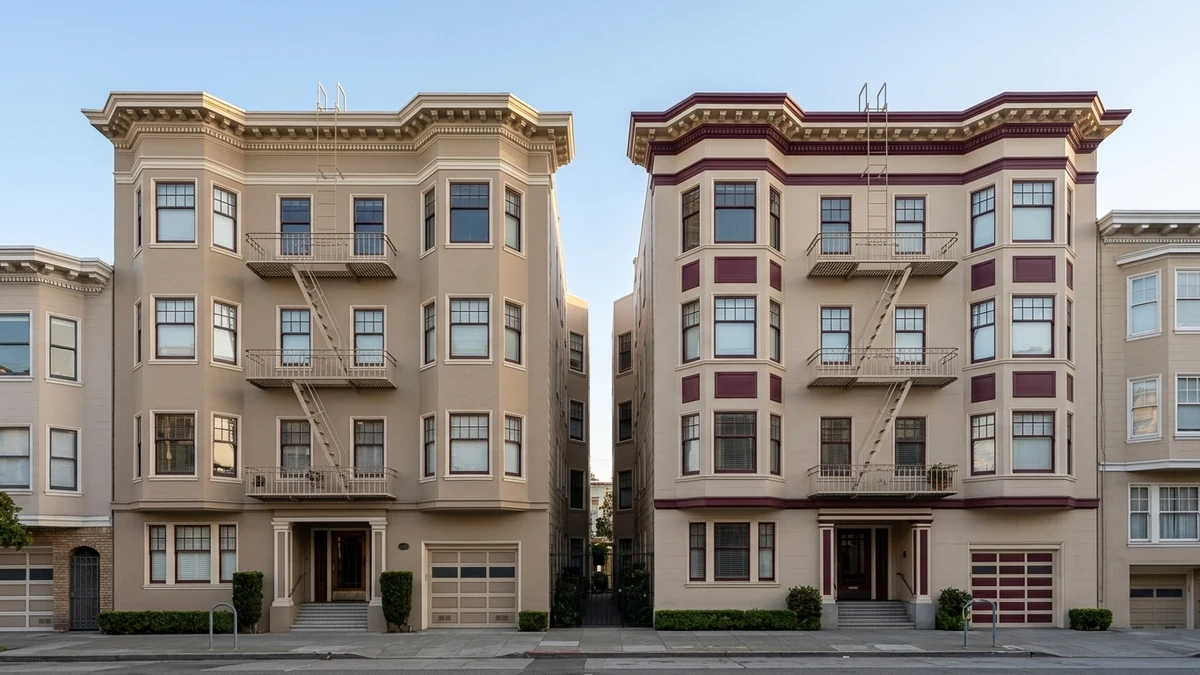
Learn which ownership, document, financing, and shared-responsibility questions actually separate a condo from a TIC in San Francisco.
On this page
Two Ways to Own a Piece of the Same Building
A condominium and a TIC, or tenancy in common, can look identical from the street and still represent two fundamentally different ownership structures.
San Francisco has a long history of both, partly because TICs became a common way to convert older multi-unit buildings into individually owned homes.
Understanding the difference matters most once you get into financing, resale, and what happens if something goes wrong with a neighbor.
What a Condominium Actually Gives You
In a condominium, you hold a separately deeded interest in your specific unit, plus a shared ownership stake in the building's common areas.
That structure is governed by recorded CC&Rs, and day-to-day decisions typically run through a homeowners association and its elected board.
Because your unit is separately deeded, conventional mortgage financing is generally more straightforward to arrange.
What a TIC Actually Gives You
In a TIC, you and the other owners hold undivided ownership of the entire building together, rather than separately deeded units.
A co-owners' agreement defines your right to occupy a specific unit and spells out how shared decisions, costs, and responsibilities are handled among the group.
Because the ownership is undivided, financing has historically been more specialized, and it's worth confirming current lending options with a lender experienced in TIC purchases.
Compare How Decisions Get Made
A condo association typically operates under established bylaws, a board, and formal voting procedures set out in the CC&Rs.
- Ask for the CC&Rs or co-owners' agreement before you get attached to a specific unit
- Confirm current financing options with a lender familiar with the specific structure
- Ask how shared costs and major repairs are decided and funded
- Ask what happens if a co-owner wants to sell or falls behind on shared payments
A TIC group's decision-making is only as clear as the co-owners' agreement makes it, so a well-drafted agreement matters enormously to how smoothly the ownership actually functions.
Compare What Happens at Resale
Ask to see the governing document for either structure before you assume you understand how a specific building operates.
| Question | Condominium | TIC |
|---|---|---|
| How is ownership structured? | A separately deeded unit plus shared common areas | Undivided ownership of the whole building |
| What governs shared decisions? | Recorded CC&Rs and an HOA board | A co-owners' agreement drafted by the group |
| How does financing typically work? | Generally more straightforward conventional financing | Often more specialized; confirm current options with a lender |
| What happens at resale? | A familiar process similar to other deeded property | Depends on the specifics of the co-owners' agreement |
| What should you review first? | The CC&Rs, HOA financials, and meeting minutes | The co-owners' agreement and any shared financing terms |
Condo resale generally follows a familiar process, similar to selling any separately deeded property.
Bring the Right Questions to Each Type
TIC resale can involve additional steps depending on the co-owners' agreement, including how a departing owner's interest is transferred and whether remaining owners have a say in a new co-owner.
Neither structure is automatically harder to resell. The details of the specific building and its documents matter more than the ownership category alone.
Neither Structure Is Automatically the Right Answer
A condo and a TIC can both be excellent choices, and the right one depends on your comfort with the specific building's documents, financing options, and group dynamics, not a blanket preference for one category.
- Review recent meeting minutes or communications among owners, where available
- Ask about insurance, both the master policy and what you'd need individually
- Confirm how disputes among owners have historically been handled
- Talk to a real estate attorney if any part of the governing document is unclear
Doreen's documented buyer-side work includes TIC purchases in Noe Valley and Russian Hill alongside condominium transactions, which is exactly the kind of side-by-side experience worth asking about when you're comparing the two.
This article is educational and does not constitute legal, financial, or tax advice. Verify current details with the appropriate professional or local authority before making a decision.

Written by