Market Watch
Why Do San Francisco Homes Keep Selling Over the Asking Price?
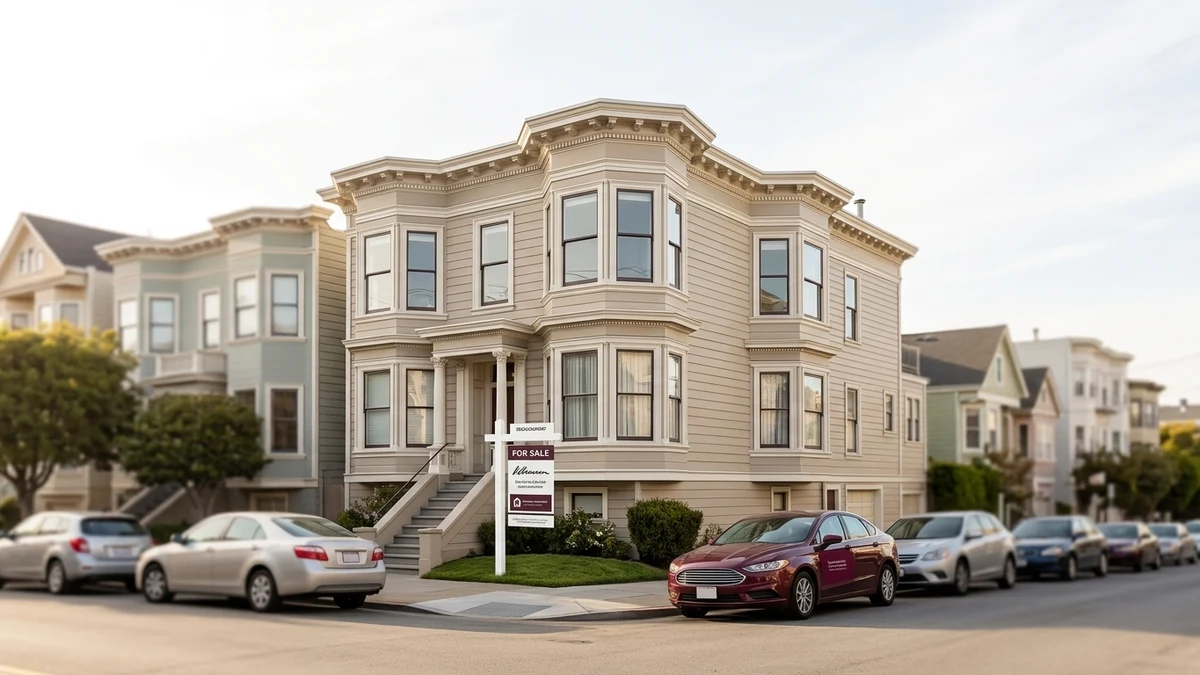
Explore the comparables, bidding dynamics, and buyer competition behind one of the most talked-about patterns in the San Francisco market.
On this page
A Pattern That Keeps Coming Up
Ask almost anyone who has bought or sold in San Francisco recently, and you'll hear the same observation: homes are closing above their asking price more often than not.
It's a real pattern, and it's worth understanding why it happens rather than treating it as a mystery or an accident.
The short answer is that asking price and expected sale price have become two different numbers in many San Francisco listings, and understanding that gap changes how you should read a listing.
Limited Supply Is Part of the Story
San Francisco's housing stock is geographically constrained. There is only so much land, and new construction has historically been slow relative to demand.
When the number of well-located, well-maintained homes coming to market stays limited, competition for each one tends to intensify.
The number on the listing tells you where the conversation starts. It doesn't tell you where it's going to end.
Pricing Strategy Plays a Bigger Role Than It Looks
Many San Francisco listings are intentionally priced below what the seller and their broker actually expect the home to sell for.
This isn't a trick. It's a strategy designed to generate broad interest and multiple offers, which can produce a stronger final price than a higher initial number would have attracted.
If you're a buyer, this means the asking price is often a starting point for competition, not a ceiling.
Buyer Competition Compounds the Effect
Once several buyers are interested in the same property, the offer process itself starts to push the price upward independent of the listing price.
Buyers competing for a limited number of comparable homes will often bid past their own initial number if they've become emotionally invested in a specific property.
Financing and Buyer Profile Matter Too
A broker's job in that moment is to help a buyer stay grounded in their actual limits, not to encourage the momentum for its own sake.
- Recent comparable sales, not just current asking prices
- Your own real financial limit, decided before you're emotionally invested
- Whether the listing price looks intentionally set to generate competition
- How much competing inventory exists in the same neighborhood right now
A market with a meaningful number of well-qualified, well-financed buyers, including buyers making large down payments, can sustain more aggressive bidding than a market without that depth.
What This Means for Sellers
This is part of why concentrated wealth in specific industries can noticeably affect pricing in the neighborhoods those buyers are drawn to.
| Factor | How It Pushes Prices Up | What to Watch For |
|---|---|---|
| Limited housing supply | Fewer comparable homes for buyers to choose from | How much similar inventory currently exists nearby |
| Below-market asking price strategy | Draws broader interest and more competing offers | Whether the asking price looks intentionally conservative |
| Buyer competition and emotional investment | Offers can climb past a buyer's original number | Your own firm limit, decided in advance |
| Concentrated buyer wealth in the area | Supports more aggressive, well-financed bidding | Whether buyer demand in the area is unusually deep |
| Seller pricing strategy | A well-priced listing can generate stronger competition than a high one | Whether the asking price is designed to invite offers or discourage them |
If your neighborhood is seeing this pattern, a real pricing strategy, not a high asking number, is usually what actually maximizes your outcome.
What This Means for Buyers
An artificially high asking price can sometimes discourage exactly the competitive interest that drives strong over-asking results elsewhere.
Go into a competitive search with a firm sense of your real limit, decided before you're standing in a property you've fallen for.
The Pattern Is Real, but It Isn't Universal
Ask your broker to walk you through recent comparable sales, not just current asking prices, so you have a realistic sense of where a specific listing is likely to land.
Not every San Francisco listing sells over asking, and not every neighborhood or property type experiences the same intensity of competition.
This article is educational and does not constitute legal, financial, or tax advice. Verify current details with the appropriate professional or local authority before making a decision.

Written by